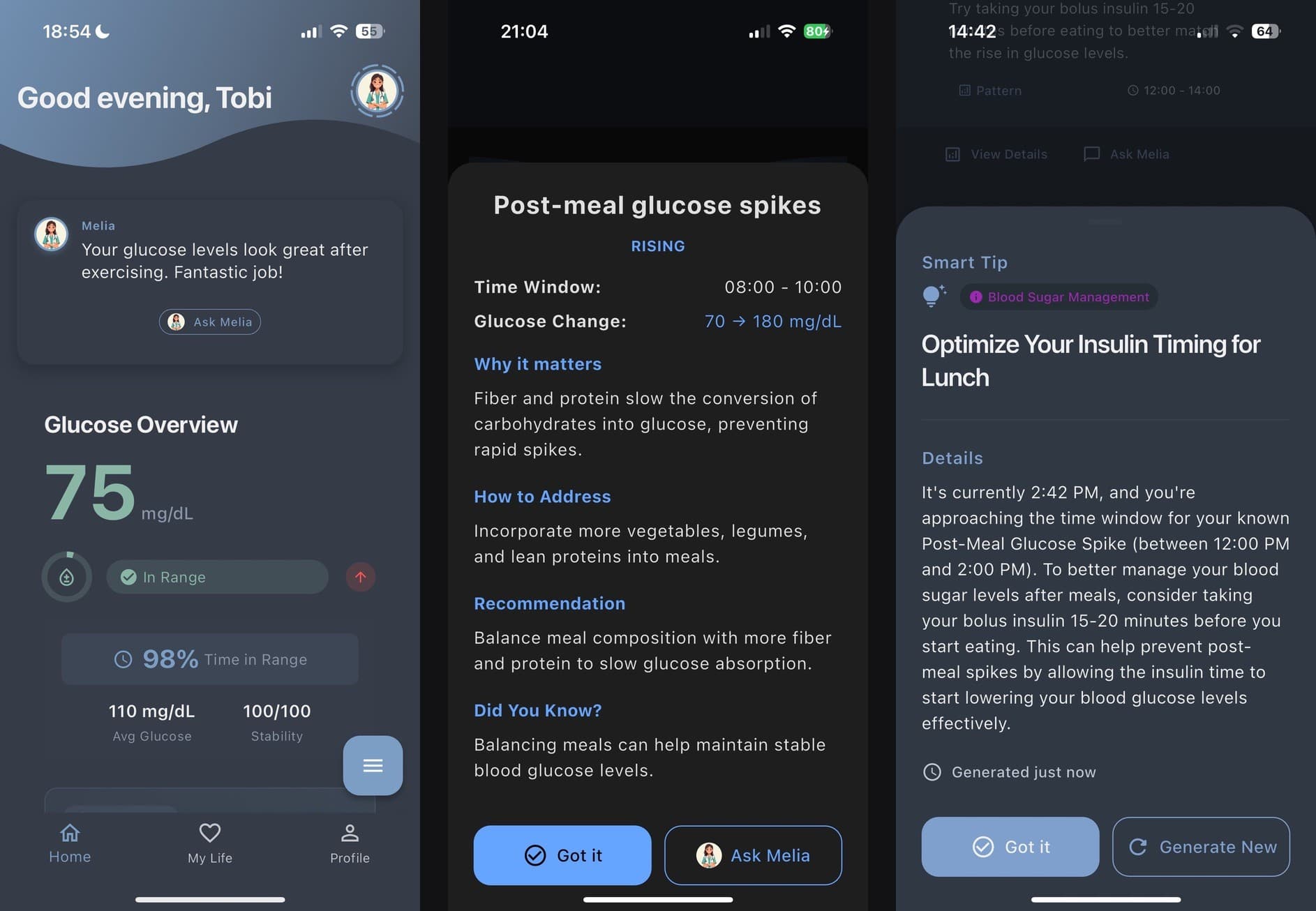

I've been Type 1 diabetic since 1999. Twenty-five years of finger pricks, insulin pens, pump sites, CGM sensors, and apps that feel like they were designed by people who've never had to use them at 3 AM with low blood sugar. MedTech devices and diabetes software have a habit of being ugly, confusing, and clinically cold. I wanted to build something better.LIT Health gave me that chance. As CTPO, I led the technology and product for Melia — an AI-powered diabetes management app that actually respects the patient experience.
What I Built
Melia is a Flutter app that pulls together continuous glucose monitoring data, meal logging, insulin tracking, activity data, and sleep patterns — then uses AI to find the patterns that matter and surface them in plain language.
AI Pattern Analysis
The core intelligence runs on AWS Bedrock (Amazon Nova Pro) and analyzes 20 days of health data at a time: blood glucose, steps, active energy, heart rate, sleep, and weight. A dedicated PatternAnalysisService runs weekly analysis with local caching (Hive) and identifies recurring glucose patterns — dawn phenomenon, post-meal spikes, exercise responses, overnight trends.A separate HealthAnalysisService handles real-time analysis for the chat interface, letting patients ask questions about their own data and get contextualized answers.
Meal Intelligence
Meal logging goes beyond calorie counting. The app integrates Nutritionix and OpenFoodFacts APIs for food recognition, plus a LiDAR-based portion estimation service on supported devices. Every meal is analyzed for its glucose impact — not generically, but based on the individual patient's response patterns.
The Stack
Frontend: Flutter 3.x (iOS + Android), GetX state management, Hive for offline-first local storage
Infrastructure: Firebase Cloud Functions (Python) for scheduled tasks, Amplify for additional cloud services
The UX Philosophy
Every screen was designed with one question: would I want to use this at 3 AM with a blood sugar of 45? No clinical jargon. No overwhelming dashboards. Insights in plain language. A chat interface that feels like talking to someone who actually understands what living with diabetes is like.
What Made It Hard
Building a patient-facing health product from scratch — GDPR, potential HIPAA requirements, and the general principle that health data demands a level of care most tech companies aren't used to. Encryption at rest and in transit, audit logging, data residency controls, role-based access. Non-negotiable from day one.The AI analysis needed careful calibration. Generic health advice is worse than no advice for diabetics — what works for one person's blood sugar can crash another's. The model had to learn individual patterns, not population averages.First time building a product from zero outside a corporate environment. Completely different pace, constraints, and definition of "done." Worth every late night.